
Not every data center thermal load belongs on the liquid loop.
Liquid cooling is the only solution for high-density GPU heat loads. AirEx DataCool™ is engineered for the non-GPU loads that remain, helping data center teams reduce chiller-hours and right-size liquid cooling plant capacity. Handle non-GPU load at a fraction of the energy cost of a liquid cooled loop and reduce your CapEx and operating costs.
Trusted by leading hyperscale and colocation operators





Putting every thermal load on the liquid loop drives unnecessary cost
Liquid cooling is the right answer for high-density AI chips. But it does not eliminate the need for efficient facility-level air-side cooling. Power supplies, networking, storage, ancillary infrastructure and mixed-density areas still need a cooling strategy.
When those loads default into a refrigeration-heavy architecture, the result is familiar: liquid and mechanical systems carry avoidable load, available outdoor-air hours are missed and plant capacity gets sized around a worst-case assumption.
Oversized mechanical cooling
Equipment sized for design-day worst case runs at part-load most of the year, wasting energy and capex.
Limited free-cooling hours
Standard solutions miss usable down-modulation hours your climate could provide.
Capacity stranded in cooling
Every kW spent on cooling is a kW that isn't earning revenue from compute.
Non-GPU loads get pulled into the wrong cooling strategy
GPU thermal loads may need liquid cooling. But not every thermal load in the facility belongs on the liquid loop.
When power supplies, memory, networking, storage and mixed-density areas are treated as part of the same cooling problem, the liquid loop and mechanical plant can end up carrying load that air-side cooling could manage more efficiently.
Liquid-side economizing is not free cooling. It still requires pump energy, dry cooler fan energy and heat-rejection capacity sized for peak ambient conditions. For eligible non-GPU loads, an engineered air-side strategy can reduce how much work gets pushed onto the liquid loop and mechanical plant.
- Capture more economizer hours
- Reduce mechanical cooling burden
- Avoid defaulting to a packaged OEM system

Putting the non-GPU heat load on liquid cooled loop can sideline air-side economizing
When non-GPU thermal load is assigned to the liquid cooling loop by default, the facility can lose the benefit of outdoor-air cooling hours that could have served that load more directly. That can increase CapEx and OpEx.
Air-side economizing gives the data center two useful operating paths:
- Mix hot aisle return air with colder outdoor air to meet cold aisle supply air (SA) requirements. When outdoor air is below the target SA temperature, the system can use heat already generated inside the data hall to temper the incoming air. That allows the non-GPU load to be managed through the air-side path instead of being absorbed into the liquid loop, transferred through a heat exchanger and rejected through dry coolers or chillers.
- Exhaust hot aisle air when outdoor air can satisfy the load directly. When ambient conditions are favorable, the system can reject heat by exhausting hot aisle air from the building and replacing it with economized outdoor air. In those hours, the non-GPU load does not need to pass through the hydronic heat-rejection path.
The difference matters. Liquid-side economizing still requires pump energy, dry cooler fan energy and heat-rejection capacity sized around the load assigned to the loop. Air-side economizing primarily uses the fan energy already required to move air from the hot aisle toward the cold aisle/inlet side of the servers.
For eligible non-GPU loads, keeping that load on the air-side can reduce operating energy and help avoid oversizing CDUs, heat exchangers, dry coolers, chillers, piping, valves and controls around thermal load the liquid loop does not need to carry.
Cooling plant capacity gets oversized
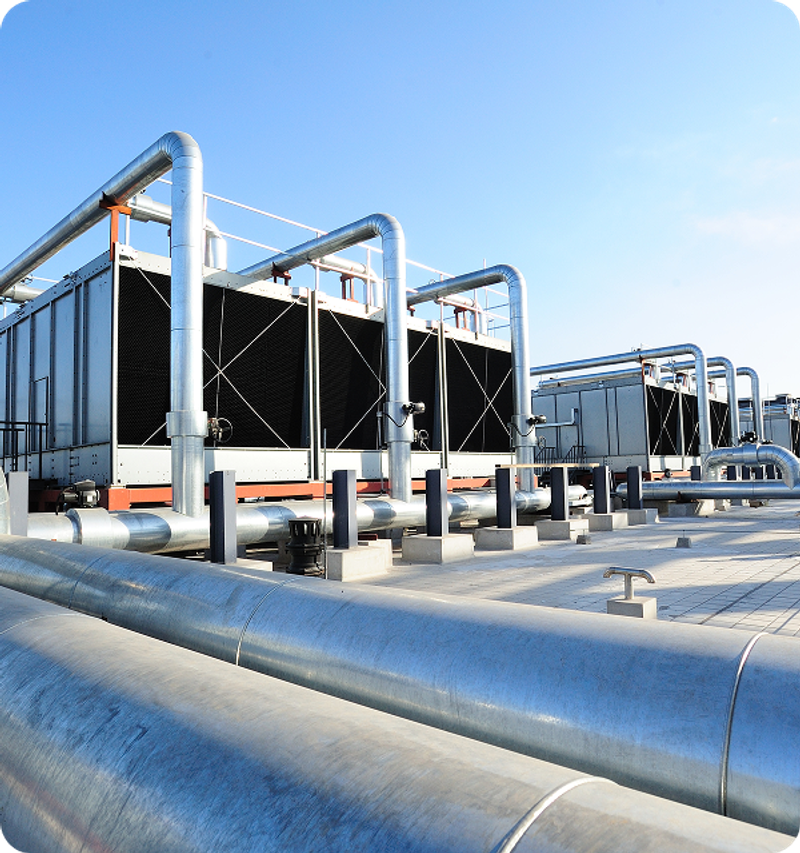
Designing around worst-case mechanical demand can drive extra chiller capacity, larger electrical distribution and more backup generation than the site’s real air-side potential should require.
The result is more redundancy, piping, valves and controls — all sized around thermal load that may not need to default to the liquid loop or mechanical plant in the first place.
Use liquid cooling where it belongs and air-side cooling where it pays.
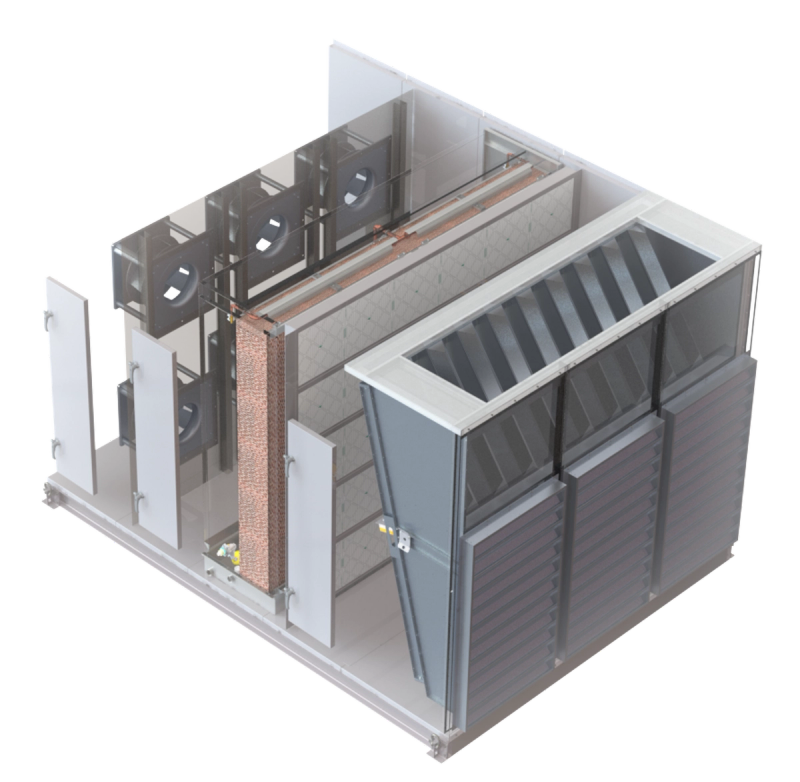
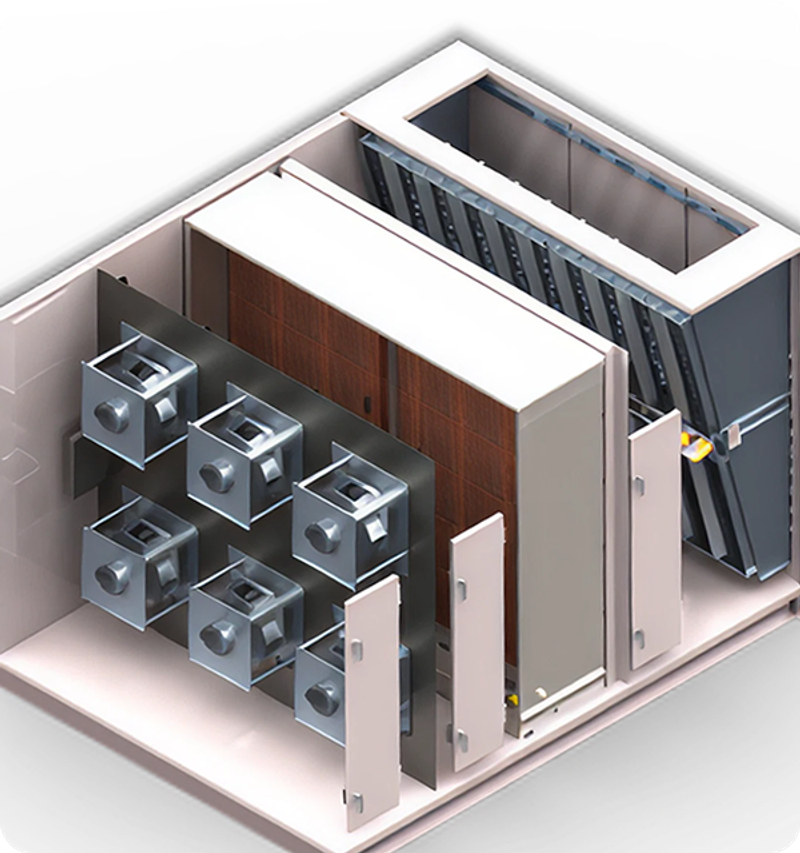
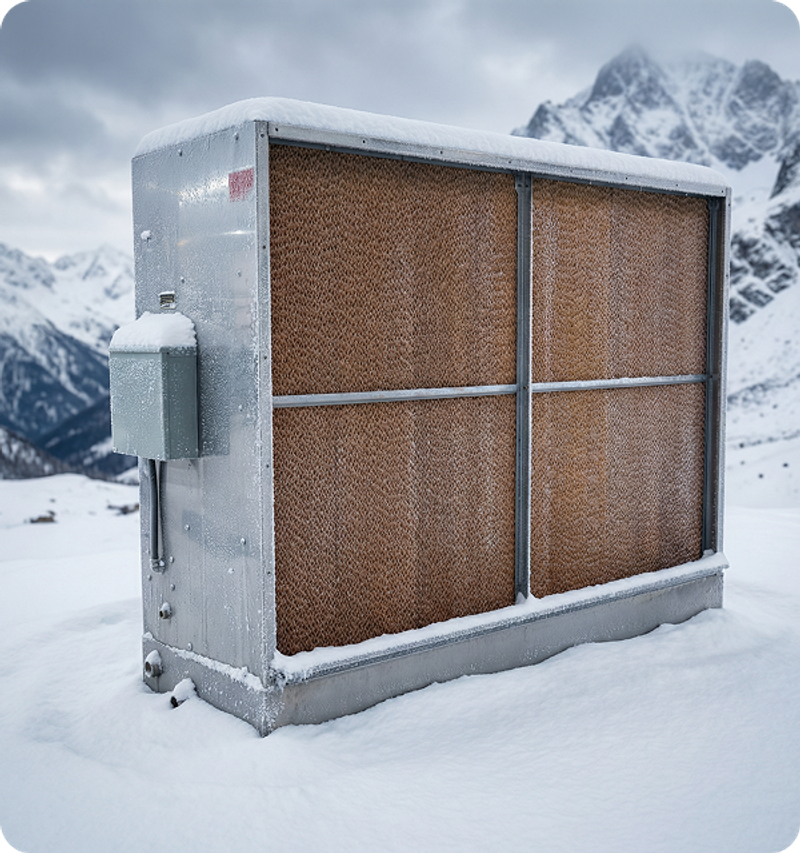
AirEx DataCool™ is the AirEx platform configured specifically for data center applications. It’s a purpose-built air-side cooling architecture engineered around the site’s climate, load profile, airflow requirements, and cooling philosophy. Depending on the project, it can integrate economizing as the core strategy, with optional combinations of Channel Blender, evaporative cooling, and chilled water support.
It is not a catalog selection. It is a site-specific cooling architecture designed to keep GPU heat on the liquid loop, shift eligible loads to outdoor air and right-size the cooling plant around actual operating conditions.
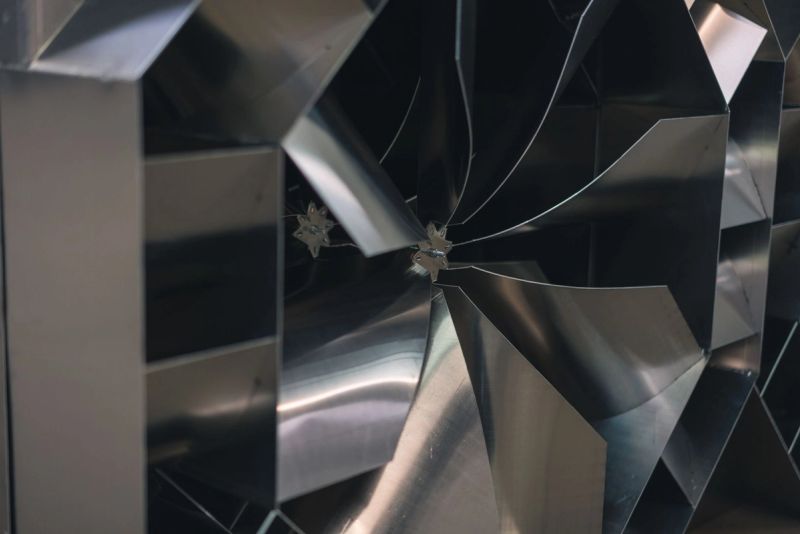
Separate GPU loads from facility air-side loads
GPU thermal loads may need liquid cooling. But power supplies, memory, networking, storage and mixed-density areas do not need to default into the same cooling path.
- Your liquid loop should stay focused on high-density processor heat
- A complementary air-side strategy for other facility loads can be handled through economizing, evaporative cooling and hybrid support where the project requires it.
Design for site conditions to capture more economizer hours
By integrating air-side economizing as a core design element, MEP engineers can shift more annual cooling hours to outdoor air instead of mechanical refrigeration.
- Blender models all 8,760 operating hours using Typical Meteorological Year, third release (TMY3) climate data to identify when the system can run in economizer only, staged evaporative cooling or mechanical supplement.
- Air-side cooling delivers cooling at a small fraction of the kW/ton of a chiller plant
Lower cooling plant CapEx by reducing mechanical peak
When air-side cooling potential is accounted for early, the mechanical plant does not have to be sized around assumptions that ignore the site’s available outdoor-air hours. On a typical 3 MW non-GPU load, the avoided infrastructure runs into the millions of dollars.
- Early evaluation of where economizing, evaporative cooling or chilled water support should carry the load allows us to right-size the cooling plant
- Chiller capacity, electrical distribution and backup generation can be considered against the real application, not a packaged default.
What the wrong cooling path costs
Non-GPU thermal load on a liquid loop vs. AirEx DataCool™
| Non-GPU load on the liquid loop is expensive | Non-GPU load on the AirEx DataCool™ is more efficient. |
|---|---|
| Put eligible non-GPU load on the liquid loop, and the facility pays for pump energy, dry cooler fan energy and chiller energy during peak ambient conditions. | Move eligible load to AirEx DataCool™ in economizer mode, and the system uses the air-side path the facility already needs to move air. Across 8,760 operating hours, that gap can compound into lower OpEx and reduced cooling plant CapEx — especially when the liquid loop is being sized for thermal load that air-side cooling could handle more efficiently. |
We do the math. When you request an air-side cooling assessment, we’ll deliver you a site-specific energy, water and CapEx comparison for your application in our complimentary site analysis.
The water question deserves site-specific math
Evaporative cooling uses water. Refrigeration-heavy cooling uses electricity, and power generation carries its own water cost. The right question is not whether evaporative cooling uses water. It is whether the total cooling strategy uses less energy, less infrastructure and the right amount of water for the site.
Water restrictions are real — and local. In Arizona, Nevada and portions of New Mexico and West Texas, permitting limits may constrain evaporative strategies. For those sites, Blender models hybrid configurations, such as economizer-forward with chilled water supplement or mechanical-primary with economizer recovery, so the architecture fits the site.
In most climate zones, moving a portion of the facility thermal load from a chiller plant to an air-side cooling system with evaporative assist can reduce the total water footprint. Blender models water use at the project level. The site analysis reviews climate, operating hours, water quality, bleed strategy and evaporative staging so AirEx DataCool™ can be configured around the region.
- Site climate determines how many hours evaporative cooling can support the load.
- Water quality informs bleed rates, flush intervals and media strategy.
- Operating mode analysis shows when the system runs dry, when it stages evaporative cooling and when mechanical supplement is required.
What it looks like to work with Blender
01
Step 1 — Share your site and cooling targets
Contact Blender and share your application details[SO2.1], like site climate, airflow requirements, load profile and operating goals. The goal is to understand what your site can support before anyone defaults to a packaged answer.
02
Step 2 — Blender designs and delivers the air-side cooling architecture
Blender reviews your application details to determine whether economizing, evaporative cooling, or hybrid support could reduce mechanical refrigeration hours. Blender will engineer and build the air-side cooling architecture around the application and deliver it as a complete package unit with centralized controls.
03
Step 3 — You have a cooling architecture that performs more like the model said it would
You'll get a cooling plant sized closer to the real application, an operating-mode breakdown for all 8,760 hours at your site, and an OpEx and CapEx comparison against mechanical-refrigeration-primary alternatives.
What engineers say about working with Blender
"These guys can build it how you need. . . They can do direct or indirect EVA cooling. Direct or indirect fired gas, heat fan arrays, special filtration, different shapes or orientations. . . They have a unique custom capability. They can tailor the product to meet the needs of either the engineer or the project. And what they're offering is high quality and fast turnaround for that design process. And a unique configurability that not a lot of manufacturers are offering."
Randy Reed
Director, Engineering Support
Norbryhn Equipment Co
AirEx DataCool™ performance data
Air-side cooling at a fraction of the kW/ton of mechanical refrigeration
True air-side cooling with outdoor air in economizer-only operation runs on pump energy alone, a small fraction of the kW/ton a chiller plant consumes delivering the same cooling. For the non-GPU portion of a facility thermal load, that energy delta compounds across 8,760 annual operating hours.
30–80% air-side savings potential on the non-GPU portion of the facility load
Per National Renewable Energy Laboratory (NREL) modeling of air-side cooling strategies in ASHRAE Climate Zones 4+, data centers can achieve 30–80% energy savings on the portion of facility load served by air-side architectures, with some locations eliminating mechanical refrigeration entirely for non-GPU loads. Actual savings depend on climate zone, supply-air setpoint, and operating-mode distribution at the specific site.
Scale impact at data center load
At typical hyperscale and colo non-GPU thermal loads, the OpEx differential between chiller-plant cooling and air-side economizer-mode cooling compounds into millions annually. Site-specific OpEx and CapEx figures are delivered in the complimentary site analysis.
20,000–78,000 CFM documented airflow range
AirEx DataCool is designed and documented across a 20,000–78,000 CFM range with custom sizing available for requirements outside the standard band.
Complete package-unit delivery
AirEx DataCool is a factory-assembled air-side cooling architecture with centralized controls, integrated staging logic, and full BMS (Building Management System)-ready integration. One submittal package; one commissioning path; reduced multi-vendor coordination.
8,760-hour TMY3 modeling on every project
Every AirEx project includes TMY3 bin-hour modeling across all annual operating hours, water-use analysis calibrated to site water quality, and explicit identification of hours requiring supplemental cooling. Delivered before any commercial proposal.
Questions engineers ask about AirEx DataCool™
What if water use is a concern?
AirEx DataCool™ can be configured with or without evaporative cooling and with or without chilled water coils. Where evaporative cooling is viable, Blender models site-specific climate, operating hours and water quality to estimate water use and configure the right bleed strategy.
What's the real water footprint of evaporative cooling vs. a chiller plant?
A valid concern and a common point of confusion. On-site evaporative cooling consumes roughly 2 million gallons per MW per year. Thermoelectric power generation (the water consumed at the power plant to generate the electricity a chiller plant would draw) consumes roughly 9.5 million gallons per MW per year on the U.S. grid average (NREL). In most climates, shifting a portion of facility thermal load from a chiller plant to AirEx DataCool™ reduces the total water footprint, on-site plus upstream. Our site analysis will quantify the footprint comparison for your specific project and your specific utility.
Do we need to abandon our standard cooling design to evaluate AirEx?
No. The first question is whether your approach is capturing as many economizer hours as your site allows. AirEx gives you a way to evaluate that without forcing a full redesign conversation on day one.
What if we’re moving toward liquid cooling?
Liquid cooling is the right solution for AI processors. It is not the right solution for the 20 to 30 percent of the facility thermal load that lives outside the chip, such as memory, networking, power, ancillary infrastructure. When that load gets absorbed into the liquid loop by default, the facility pays for it in larger Coolant Distribution Units (CDUs), extra dry cooler capacity, and 8,760 hours a year of pump and fan energy. AirEx DataCool™ is engineered to carry that non-GPU load on pure air-side cooling, at a small fraction of the kW/ton. Liquid cooling for the chip. AirEx DataCool for the rest.
See how much of your cooling load can shift to outdoor air
If you're evaluating a current design or upcoming project, request the assessment below. We'll model your site with TMY3 bin-hour analysis, identify the hours where economizing and evaporative cooling can reduce mechanical refrigeration, and return a full operating-mode breakdown before any commercial conversation.